This article was written in May 2002, by Matthew Dillon dillon at backplane.com.
Well, I finally retired my old Oly 320L and bought the Canon G2. I was considering buying a higher-end digital camera (a friend of mine is thinking about the Canon D60) but after some thought I decided that the technology was still moving too quickly for it to be cost effective. Specifically, CCD technology is expected to improve dramatically in the next two years (2003/2004 timeframe). Other areas of digital camera technology have improved dramatically since the Oly 320 era. Specifically, camera interfaces appear to be standardizing on USB and compact flash, and even those SmartMedia cards seem to be hanging in there.
The Canon PowerShot G2 is a 4 MegaPixel camera producing pictures at resolution of 2272x1704. This is plenty sufficient to generate high quality 8.5x11 prints. It is a major improvement over the G1 and earlier models. There are more features then you can shake a stick at and the user interface only takes a day or two of playing around to become relaxed with. It has USB and compact flash ports and operates well with Windows, Linux, and FreeBSD PCs.
News Flash! USB replaces serial for direct camera-to-computer downloads. Thank the heavens! You should not buy a new digital camera unless it has a USB port. Standard Serial is dead. USB is fast enough that I expect it to be useful as a download interface for the next 15 years worth of digital camera technological advanacement and I consider it to be a stabilizing factor for the digital camera industry.
For in-camera picture storage I decided that compact flash / IBM microdrive support was essential. SmartMedia is still hanging in there, but the SmartMedia cards are just too small. They are too small and fragile to be manageable and too small to be able to really pack in the storage relative to compact flash at a competitive price, especially as technology progresses. My feeling is that the SmartMedia vendors are being forced to subsidize the media to stay competitive. The volume production just isn't there. Compact flash has gone through major technological leaps, showing a robust competitive environment and high volume demand for the media. As of this writing 256MB cards are available for around $100 which makes them competitive with 1GB IBM Microdrives for $250. Until the 256MB cards came out I was not considering anything other then a microdrive, but a 256MB card has sufficient storage for around 123 super-fine pics (84 RAW mode pics) and there are advantages to having a couple of cards handy rather then a single microdrive card. As an added bonus, cheap USB readers for the compact flash card / microdrive can be had for $20 to $30, allowing you to plug your compact flash card directly into a computer or laptop's USB port. The format is definitely being developed far more quickly then the SmartMedia format. For these reasons I believe the compact flash format will win the media wars over both SmartMedia and the Sony Stick, though the Stick still has a chance due to its volume use in portable audio media devices. Either way I believe SmartMedia is dying.
In anycase, back to the G2. The G2 is a good medium-end digital camera costing around $800 as of this writing. I found it to be fairly snappy in regards to lag, the picture quality is excellent though you have to watch out in shots with highly contrasting areas (an issue with nearly all digital cameras verses 35mm film so it is not a show stopper). The user interface is excellent. I really like the fold-out color LCD display and nearly everything required to operate the camera also exists on the standard LCD on the top of the camera. An in-camera rechargeable lithium ion battery comes standard and is supposedly good for 500 shots with the LCD monitor on (I haven't tested this yet) and 1000 with it off, which is another major improvement over earlier digital cameras. UPDATE 4 Oct 2002: I spent a week in Hawaii for a friend's wedding and decided not to bring the camera's battery charger. I brought three battery packs and four 256MB compact flash cards. I took 610 superfine (jpg mode) pictures, about 250 of them with the flash. This filled all four flash cards but, more importantly, I only used 1.5 battery packs for the entire week! I'm impressed!
The G2 has a 3x optical zoom lens and can take shots from as close as 2.4 inches (max wide angle) or 7.9 inches (max telephoto). Some of the test shots below demonstrate this. The G2 also has a digital zoom on top of the optical zoom but since you don't get any more resolution out of it it's generally considered to be just a fluff feature. Still, it's pretty cool to digitally zoom in on something far away and see it through the LCD monitor :-).
There are many other features, including various situational modes, movie & audio recording (but if you really want that you should get a cam-corder), Aperture and Time priority modes, and a hot-shoe for an external flash.





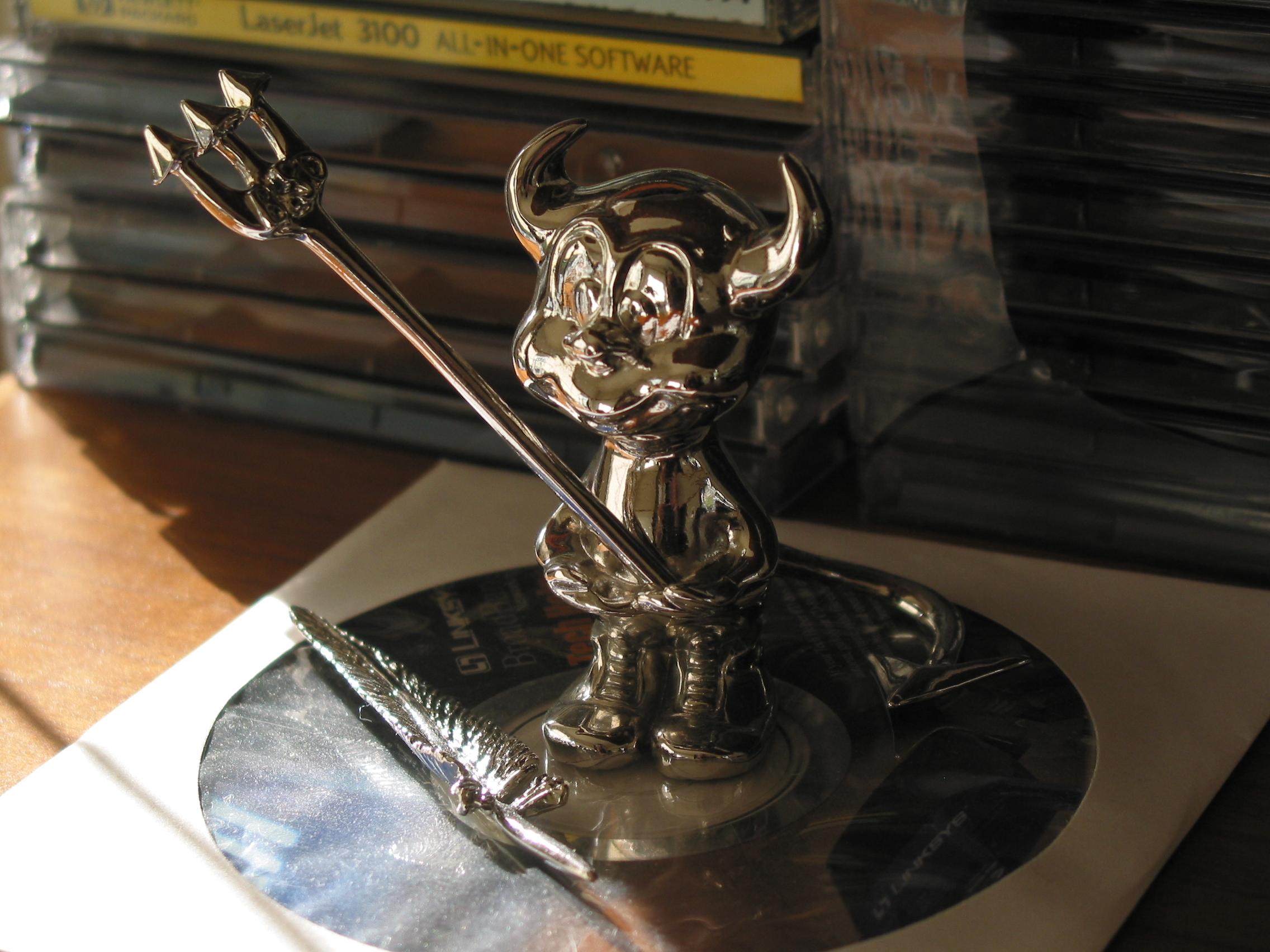
More Pics! (Night Shots, lightning)
I really like this camera. The biggest problem with any digital camera is always going to be dynamic range and exposure compensation. The Canon does a pretty good job but I recommend that you set the default compensation for non-flash shots to -0.3EV and that you use a +/- 0.6EV bracket for bracketed shots. Those are my conclusions from the contrast tests I ran below.